
Cary, NC · Garage Door Service
Why Cold Mornings Break Springs on Cary's 1980s and 90s Garage Doors
Cary's housing dates mostly from the 1980s and 90s, with older stock back to 1967. Here's why cold snaps snap springs on these doors, and what the fix runs.
- Repairs & new doors
- Springs & openers
- Serving 6 nearby communities
How Local Conditions Play In
Cary sits in a cold-moderate band, not the deep-freeze territory of the upper Midwest, but cold enough that steel contracts and loses flex on the mornings temperatures drop fast. A torsion spring that's been doing fine all fall can snap the first hard cold snap of the year, because the metal gets brittle right when the door gets heaviest to lift by hand. This isn't a once-a-decade event here. It's a pattern tied to how our winters actually behave: mild stretches broken by sharp overnight drops, which is exactly the cycle that fatigues a spring faster than steady cold would. Most of the housing in this service area went up between 1967 and 2006, with the bulk of it dating to the 1980s and 90s across six named areas. That matters because a spring installed when a house was built in, say, 1991 is now well past any reasonable service life, cold weather or not. Add a cold snap on top of a 30-plus-year-old spring and you've got the exact failure we see most. Newer builds in the service area aren't immune, but the older stock is where we see it first and worst.
What Is Going On
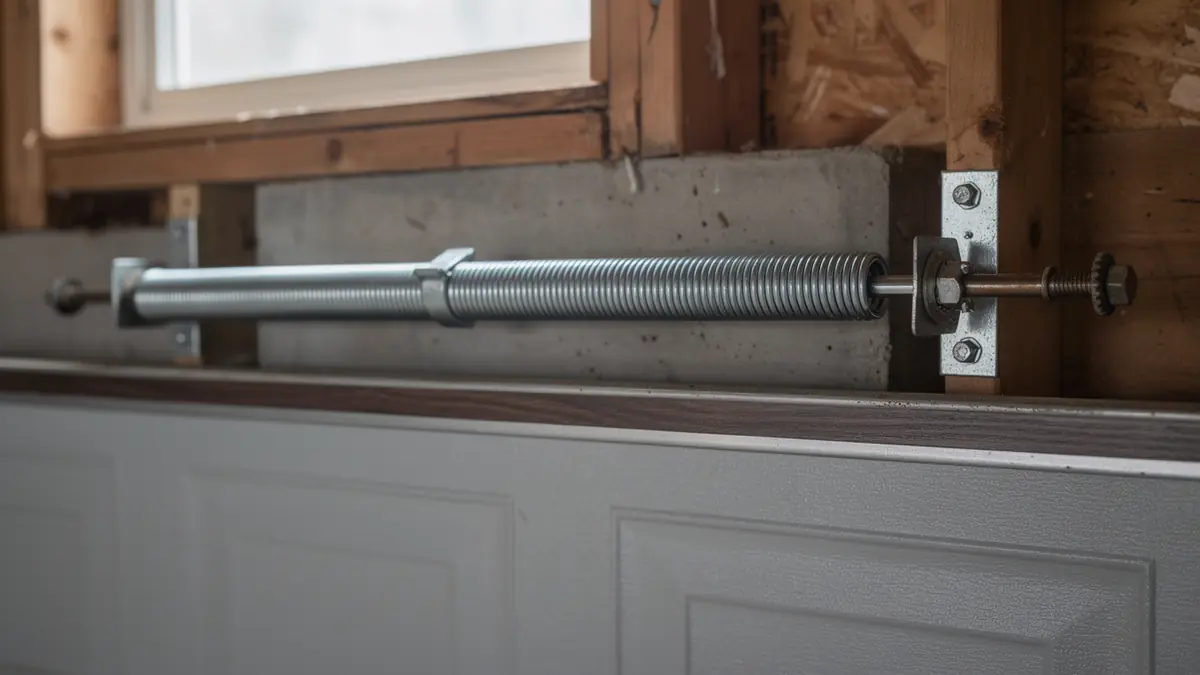
A torsion spring stores energy by twisting. Cold steel is stiffer and more prone to micro-fractures at the coil surface, so a spring that's already near the end of its cycle count is more likely to let go on a 28-degree morning than a 60-degree one. You'll usually hear it: a bang from the garage, then the door won't move or moves unevenly. Sometimes one spring on a double-spring door breaks while the other holds, which makes the door look like it's trying to lift itself sideways. Given that most houses in Cary's service area carry original or early-replacement hardware from the 1980s-1998 era, a lot of what we're pulling out is springs that have simply outlived their wind count, with cold weather as the trigger rather than the root cause. The root cause is age. Cold is just when it shows up.
What It Costs
We don't have a flat number to hand you here because it depends on whether it's one spring or two, what size door, and what's on the shaft already. What we can tell you is the pattern we see: in a service area where median household income runs $75,359 and the bulk of the 9,632 owner-occupied houses were built in that late-80s to late-90s window, spring replacement is one of the most common calls we take, especially from November through February. If your opener is also straining or your cables look frayed, that's worth mentioning when you call, since it can change what the job actually needs. We'll tell you straight if a spring job is enough or if something else on the door needs attention too - we're not going to sell you a full system replacement when a spring will do.
The Common Mistake
The mistake we see most is someone hearing the bang, finding the door stuck, and trying to force it open or closed by hand or with the opener still engaged. With a broken spring, the door's full weight is no longer balanced, and forcing it can bend track, tear the opener's drive gear, or drop the door suddenly. Disconnect the opener and leave the door alone until it's looked at. One honest limitation: we don't recommend DIY spring replacement, not because of brand loyalty, but because a torsion spring under tension can cause real injury if the winding bars slip, and that's not a risk worth the money saved.
Frequently asked questions
Why does my spring always seem to break in winter?
Cold steel is stiffer and more likely to fracture under tension, especially once a spring is near the end of its cycle life. In Cary's cold-moderate climate, the swing between mild days and sharp overnight drops stresses an aging spring more than steady cold would. It's usually an old spring meeting a cold morning, not the cold alone causing the break.
My house was built in the 1990s - is the spring original?
A lot of houses in this service area date to the 1980s and 90s, and it's common for the original torsion spring to still be on the shaft decades later. A spring from that era is well past typical service life, so if you haven't had it replaced, cold weather is a likely time for it to finally give out.
Can I drive my car out if the spring just broke?
If the door is down and the spring let go, leave it. Without spring tension, the door is far heavier than the opener or a person can safely manage, and forcing it risks bent track or a dropped door. Disconnect the opener, don't force the door, and get it looked at before you need it open again.
Related garage door services in Cary
More garage door guides
Book garage door service in Cary
Call now or request a quote - tell us what the door is doing and where you are.