
Cary, NC · Garage Door Service
Why So Many Cary Garages Still Have the Original Uninsulated Door
Most Cary houses went up between 1967 and 2006, back when a single-layer steel door was standard. Here's what that means for your garage today.
- Repairs & new doors
- Springs & openers
- Serving 6 nearby communities
How Local Conditions Play In
Cary sits in a cold-moderate climate band, which means the garage isn't just storage - it's a buffer between outside air and whatever's on the other side of that interior wall. A single steel skin door does almost nothing to slow that transfer. In most of Cary's six main pockets of housing stock, built mostly through the 1980s and 90s with the overall range running 1967 to 2006, the original door was a basic non-insulated steel panel. That was normal for the era. Builders weren't speccing insulated doors on spec houses, and most municipal codes of that period didn't require it for an unconditioned garage bay. So if your house falls in that window and you've never swapped the door, you're very likely looking at the builder-grade unit, thirty-plus years old in a lot of cases, with no foam core and whatever weatherstripping is left on the bottom seal. That's not a flaw in your house. It's just what got installed when the subdivision went in, and it's common enough across the service area that it's one of the first things we check on a service call.
What Is Going On
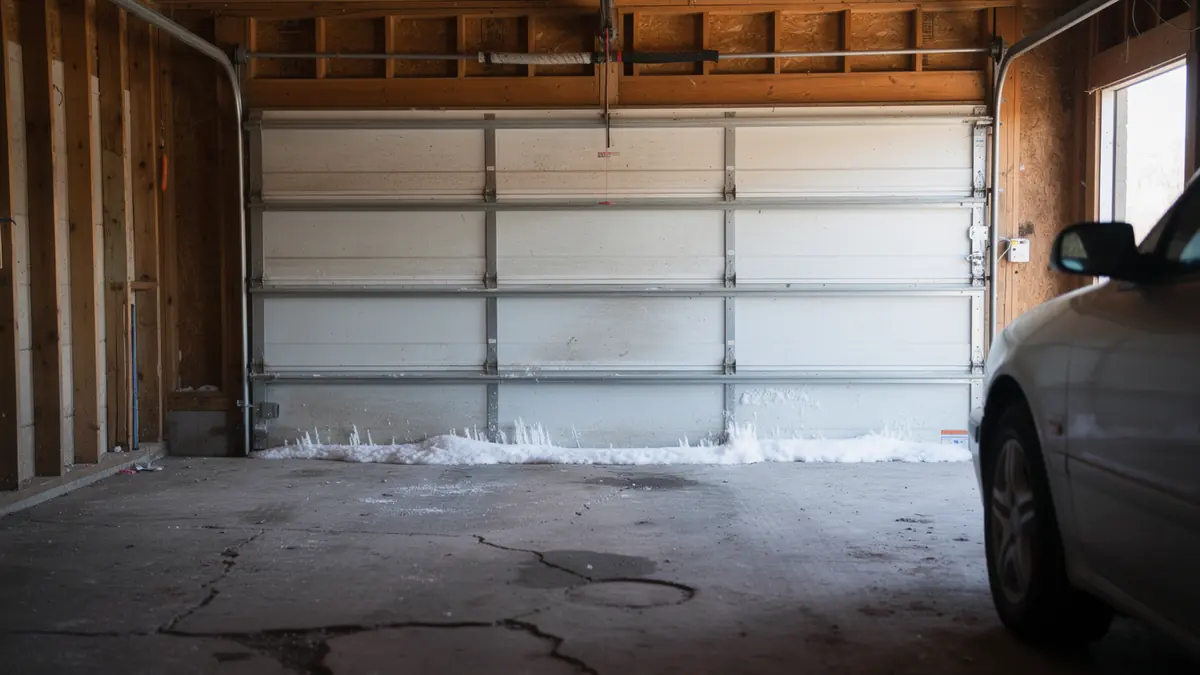
An uninsulated steel door from the 1980s or 90s has two separate problems that get confused as one. First is thermal: a hollow steel panel conducts cold straight through, so the garage tracks close to outside temperature in winter, which matters if that garage shares a wall with a bedroom or a laundry room, or if the attic above it is open to living space. Second is physical wear: thirty-plus years of panel flex without a foam core backing means more denting, more oil-canning in the panel face, and seams that have loosened at the hinges. Those are age problems, not insulation problems, but they show up at the same time because the door is the same age as the house. On a house built in 1998 - right at the median for this market - that door has had three decades of opening and closing, roughly 10,000 to 15,000 cycles depending on how the household uses it. By that point the spring is usually original too, and it's sized for the door's original weight, not a heavier replacement panel.
What It Costs
We don't have a flat number to hand you here, because it depends on the door size, the track configuration, and whether the opener and spring need to come along with the swap - a double-wide door costs more to insulate than a single, and a house with a torsion spring set to the old door's weight needs that spring re-rated for a heavier insulated panel. What we can tell you: median household income across the service area runs around $75,359, and with roughly 9,632 owner-occupied houses in that 1967-2006 build window, this is one of the more common quotes we write. If your garage sits under a bedroom or you've felt a cold wall in a room next to it, insulating is usually worth the spend. If the garage is detached or isolated from living space, the payback is a lot thinner, and we'll tell you that straight instead of upselling a door you don't need.
The Common Mistake
The mistake we see most is someone replacing a thirty-year-old uninsulated door with a new uninsulated door because it's the cheaper quote, without re-checking the spring. The old spring was wound for the old door's weight. An insulated replacement panel weighs more, and if nobody re-rates the spring, the opener strains, the cables wear faster, and the door doesn't balance right - it'll want to slam down or stick halfway. We won't install a heavier panel on an unmatched spring; it's the kind of corner that looks fine for a few months and then costs you an emergency call. The honest limitation here: we can't always tell from a phone call whether your spring needs swapping too, since houses in the same 1980s-90s pocket don't all have identical hardware even when they were built by the same crew. That's a five-minute check in person, not a guess over the phone.
Frequently asked questions
Is my garage door original to the house if it was built in the 1990s?
Often, yes. A lot of Cary houses from that stretch - the bulk of local stock runs 1980s through 90s, with the broader range 1967 to 2006 - still have the builder-installed steel door. If it's never been replaced, it's almost certainly a non-insulated single-layer panel, which was standard for spec housing at the time.
Do I need to insulate if my garage is detached from the house?
Usually the payback is smaller. Insulation helps most when the garage shares a wall or ceiling with living space, which is common in the attached-garage layouts typical across this area's 1980s and 90s subdivisions. A detached bay with no shared wall won't see the same difference in comfort.
Will a new insulated door work with my old opener and spring?
Not always without changes. An insulated panel weighs more than the original steel door, so the torsion spring may need to be re-rated to balance it properly. We check this on-site before quoting, since we won't put a heavier door on hardware sized for the lighter original.
Related garage door services in Cary
More garage door guides
Book garage door service in Cary
Call now or request a quote - tell us what the door is doing and where you are.